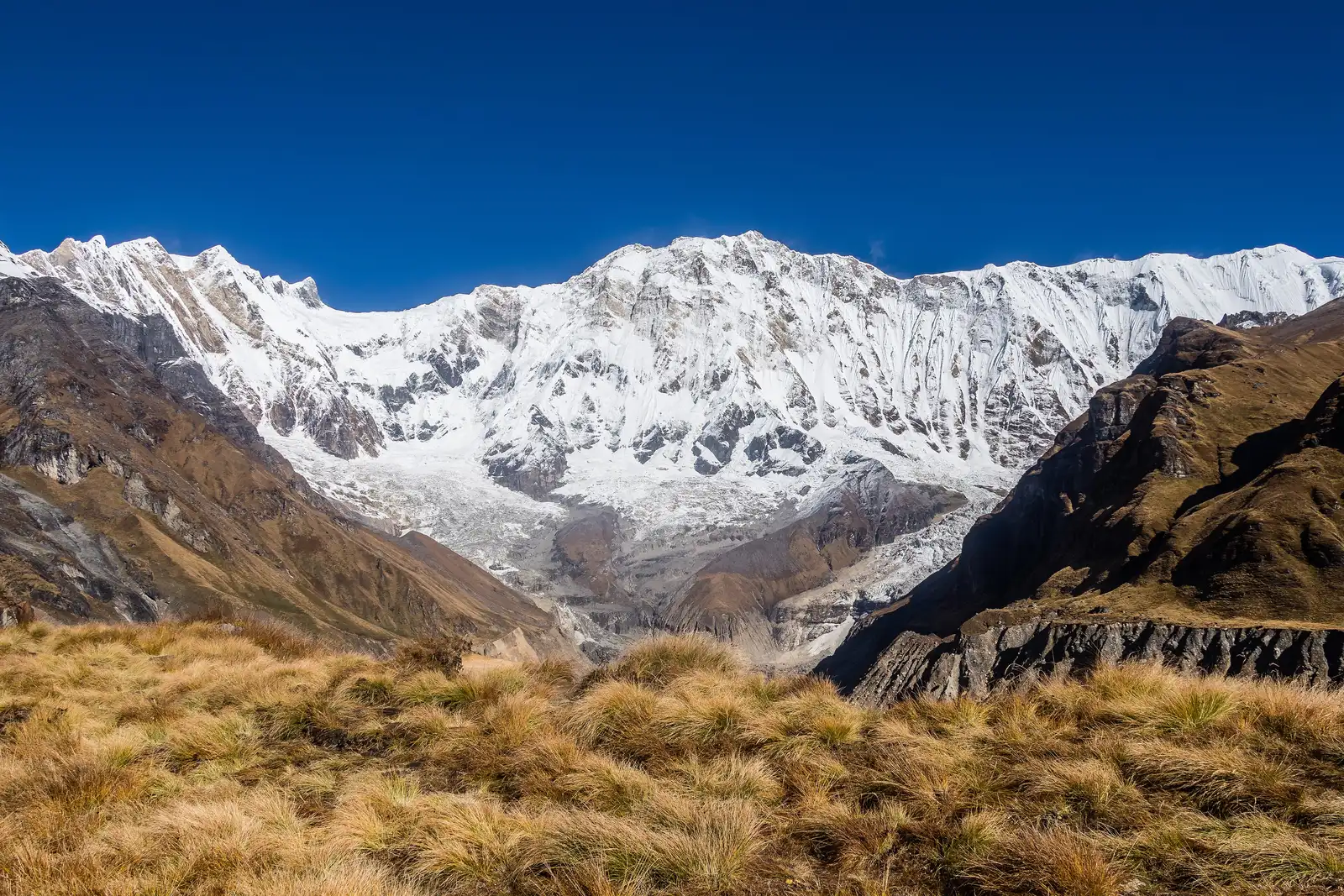
Lamjung, Manang & Mustang
Annapurna Circuit Trek
A circuit of the Annapurna massif, crossing from green hill country into the dry, Tibetan-influenced world of Manang and Mustang.
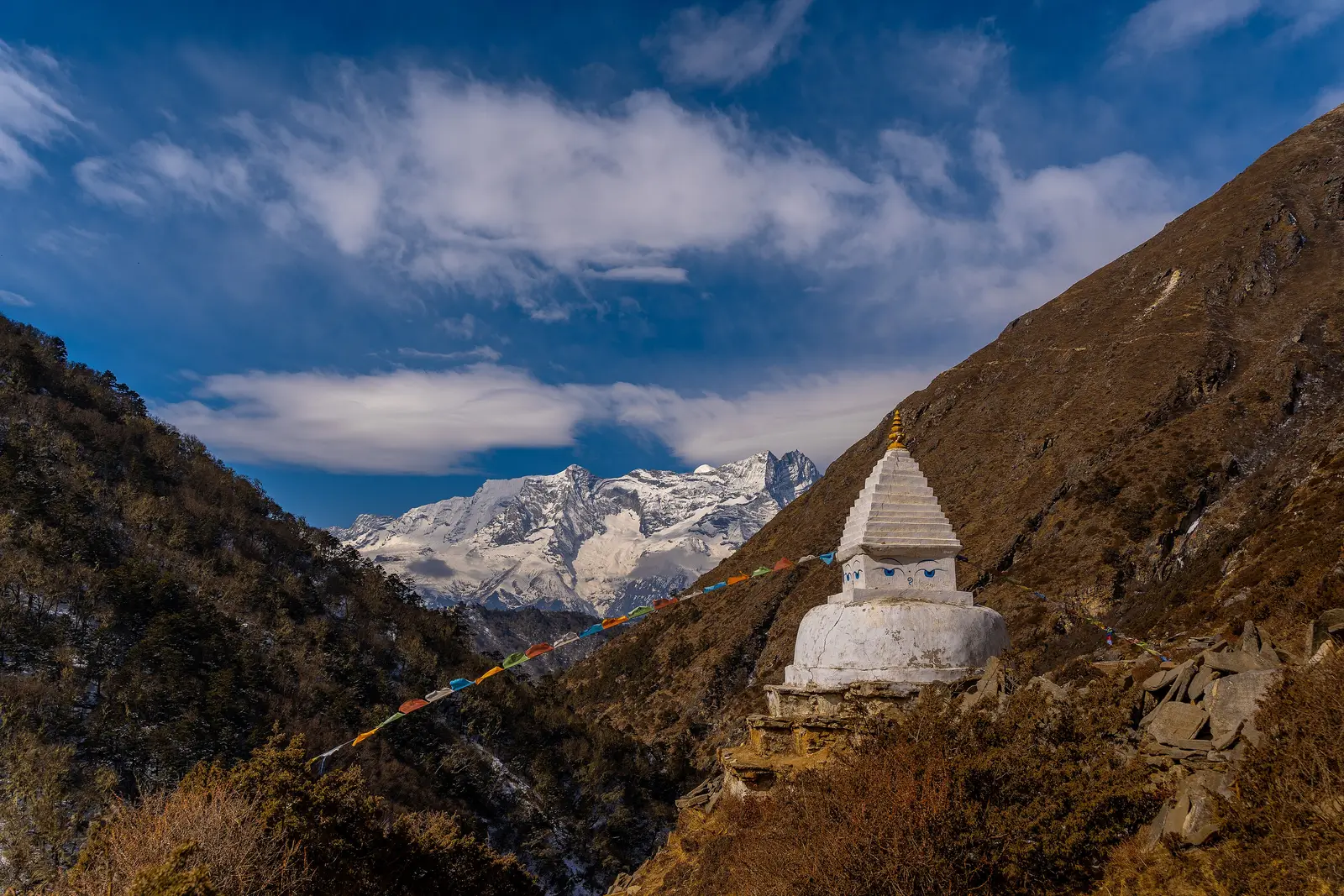
Trekking · Everest & Khumbu
Sixteen days through the Khumbu, built around unhurried acclimatisation and the villages that make this valley more than a summit approach.
Sample sleeping altitudes
Sample sleeping altitudes. Actual acclimatisation depends on the individual.
Scroll the chart sideways →
On a motion-enabled browser this chart becomes a scroll-driven walk along the route. The profile is illustrative: actual sleeping heights depend on acclimatisation and conditions.
The route, on foot
Sample sleeping altitudes · route returns to Kathmandu
Keep scrolling
Altitude profile: KTM (1,400 m), Lukla (2,860 m), Phakding (2,610 m), Namche (3,440 m), Tengboche (3,860 m), Dingboche (4,410 m), Lobuche (4,940 m), Gorak Shep (5,164 m), Pheriche (4,270 m), Namche (3,440 m), Lukla (2,860 m), KTM (1,400 m).
01 — Overview
The Everest Base Camp trek is the best-known walk in Nepal, and for good reason: it climbs from the pine and rhododendron forests of the Dudh Koshi into a high, spare world of glacier, moraine and Sherpa settlement. The route is not technical, but it is high — and how the days are paced matters more than how fit you are.
Our sample itinerary spreads sixteen days from Kathmandu to Kathmandu, with two acclimatisation days and two contingency days held back for weather. Lukla flights are frequently delayed by cloud, so returning to Kathmandu with a spare day is not padding — it is how this trek is usually planned.
Above Namche the valley opens into the heartland of Sherpa culture: Tengboche's monastery, the mani walls and chortens along the trail, and villages that are home all year rather than seasonal camps. It is worth learning a few words of Nepali and, in the high season, remembering that the trail is a working path as much as a trekking route.
16 days · sample itinerary
Arrive, settle in, and meet for a briefing on route, equipment and altitude. A short walk in the old city if the flight timing allows.
The early flight swings east along the Himalaya. From Lukla (2,860 m) the trail descends gently through Cheplung and the Dudh Koshi valley.
Cross the long suspension bridges above the river, enter Sagarmatha National Park at Monjo, and climb the switchbacks to Namche's amphitheatre of houses.
A short climb to the Everest View Hotel at Syangboche (3,880 m) and back — climb high, sleep low. The afternoon is for the Sherpa museum and the Saturday market.
A contouring trail above the Dudh Koshi, then a descent to Phunki Thanga and a switchback climb through forest to Tengboche and its monastery.
Rhododendron forest gives way to juniper and open valley as the trail passes Deboche, Pangboche and the long stone wall into Dingboche.
Climb Nangkartshang Hill (about 5,083 m) for a view of Makalu and Island Peak, then rest. A second night at the same altitude makes the next days noticeably easier.
Cross the Khumbu Khola and climb past Dughla (4,620 m) to the memorial ridge above the glacier, then on to Lobuche.
Follow the lateral moraine to Gorak Shep, then walk out to Base Camp (5,364 m) among the ice pinnacles. This is a long, cold day.
An early climb to Kala Patthar (5,545 m) for dawn on Everest, Nuptse and Pumori, then descend to Pheriche.
Retrace the valley with the wind at your back, through Pangboche and Tengboche, and down to the Dudh Koshi.
The long descent through Monjo and Phakding, crossing the bridges one last time to Lukla.
Morning flight to Kathmandu, weather permitting. Afternoon free.
Held for delayed Lukla flights, which are common in cloud or wind. If unused, it becomes a free day in Kathmandu.
A relaxed day: the great stupa at Boudhanath, a heritage walk through Kathmandu Durbar Square and a farewell dinner.
Transfer to Tribhuvan International Airport.
Days and stages are indicative. Weather, route conditions, permits and transport can change the plan; a guide may adapt the itinerary for safety or acclimatisation.
Accommodation · transport
Teahouses and small lodges throughout, mostly twin rooms with shared bathrooms; a few villages offer attached bathrooms at extra cost. Rooms are simple and unheated, and above Tengboche the water in the pipes can freeze overnight.
Dining rooms are heated by stove and are where the evening happens. Blankets are provided, but a sleeping bag rated to about −15 °C is normal for the high villages. In Kathmandu, a comfortable boutique hotel in the old city for three nights.
Kathmandu–Lukla–Kathmandu flights on a twin-otter or Dornier, weather dependent, with luggage limited by the airline (usually 10–15 kg in the hold plus hand luggage).
All road transfers in a private vehicle, and porter support for the trekking days (typically one porter for two trekkers, with a load limit agreed in advance).
Sample inclusions
Before you go
You do not need to be an athlete, but you do need to be comfortable walking 5–7 hours with a light daypack on consecutive days. Build up with hill walking and stairs in the three months before departure.
The itinerary climbs slowly and includes two acclimatisation days. Symptoms of acute mountain sickness — headache, nausea, poor sleep — should be reported to your guide immediately. Descent is the only reliable treatment, and the itinerary can be adapted.
Layers beat bulk: base layer, fleece, down jacket, shell, warm hat and gloves, sun hat, sunglasses rated for glacier light, and broken-in boots. A four-season sleeping bag is worth the weight.
Choose a policy that explicitly covers trekking above 5,000 m and helicopter evacuation. Keep the policy number and insurer's emergency line with you, not in your checked bag.
Answers, not promises
No. This is a trek, not a climb: no ropes, no technical equipment. You do need good general fitness, the ability to walk on rough stone steps, and a willingness to turn around if altitude or weather demands it.
In the high villages, night temperatures can fall well below freezing in spring and autumn and considerably lower in winter. Daytime walking temperatures are usually mild in the sun and sharp in the wind.
Flights are weather dependent and delays are normal. This sample itinerary includes a contingency day on the return; in the live version, helicopter transfer or a road route via Salleri would be discussed with the operator.
Generally March to May and October to November for stable weather and clearer views. Winter is quieter but much colder, and the monsoon brings cloud, leeches on the lower trail and flight disruption.
Step one of two
Send a note with your dates and group size. In this demo, the form validates your details and prepares a WhatsApp message rather than contacting a real inbox.
Lamjung, Manang & Mustang
A circuit of the Annapurna massif, crossing from green hill country into the dry, Tibetan-influenced world of Manang and Mustang.
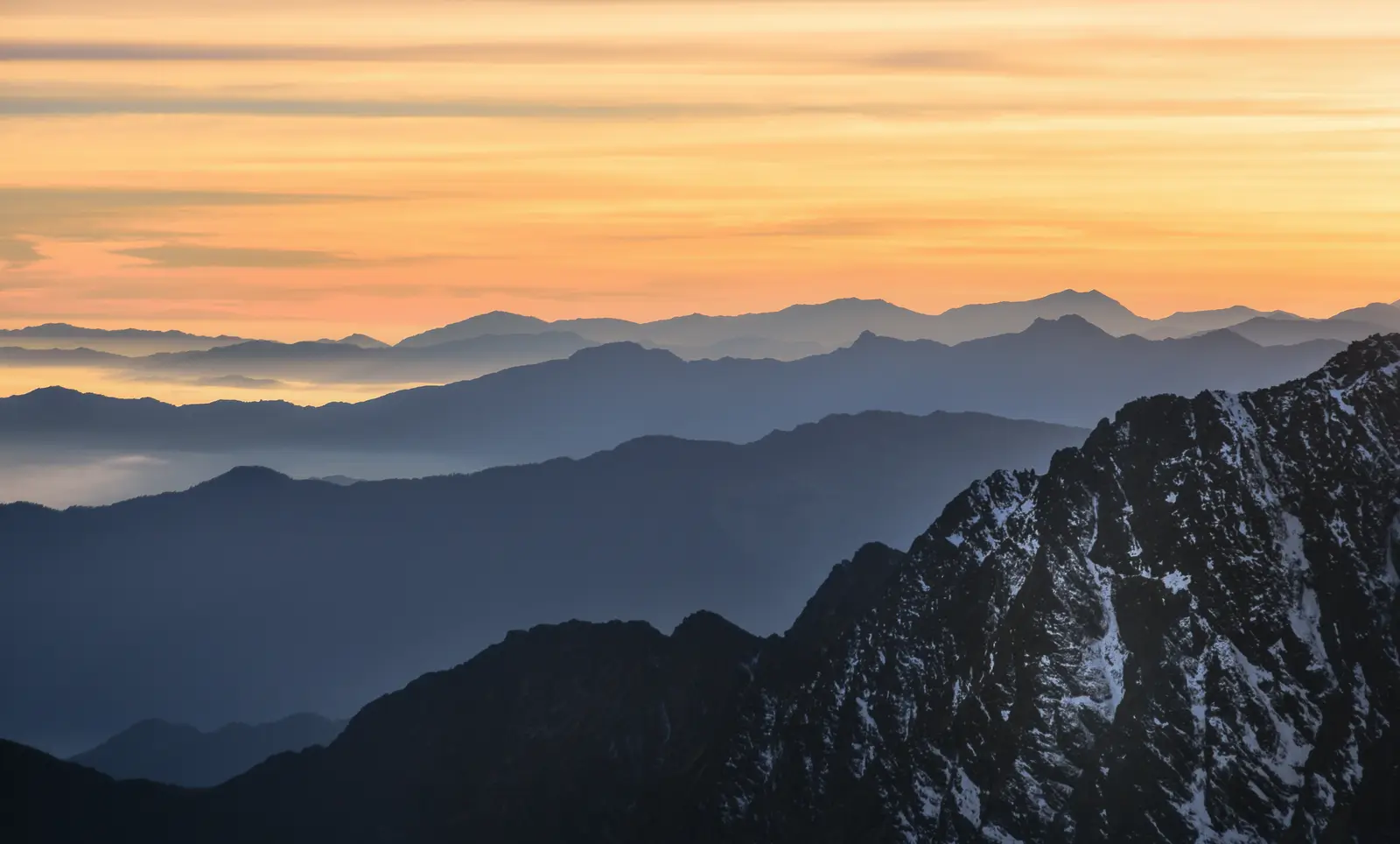
Rasuwa, Bagmati Province
The closest big valley to Kathmandu: a short drive, then forest, glacier and the high meadows below Langtang Lirung.