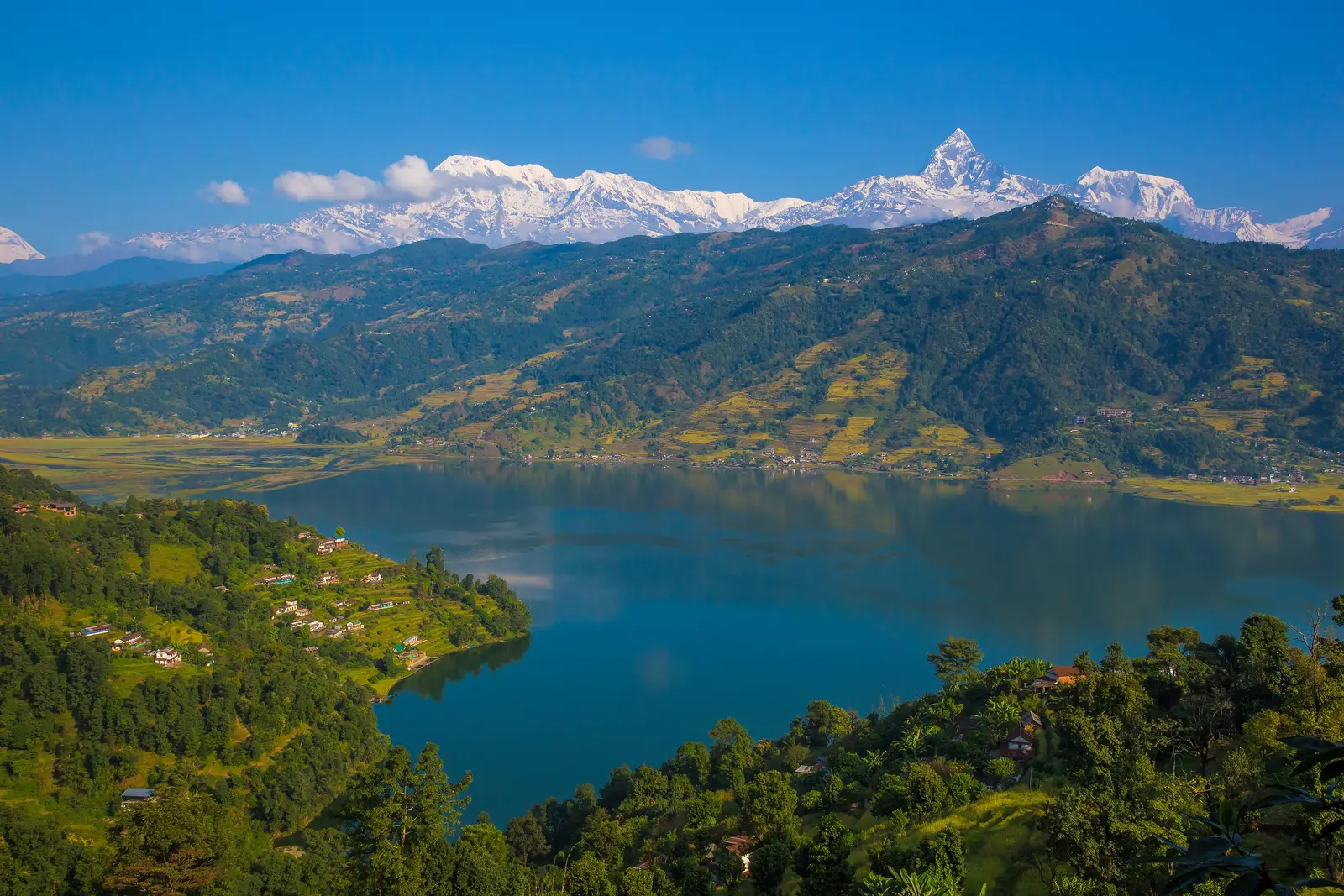
Kaski, Gandaki Province
Pokhara Escape
Five unhurried days on Phewa Lake, with a Himalayan sunrise, hill villages and as much — or as little — activity as you want.
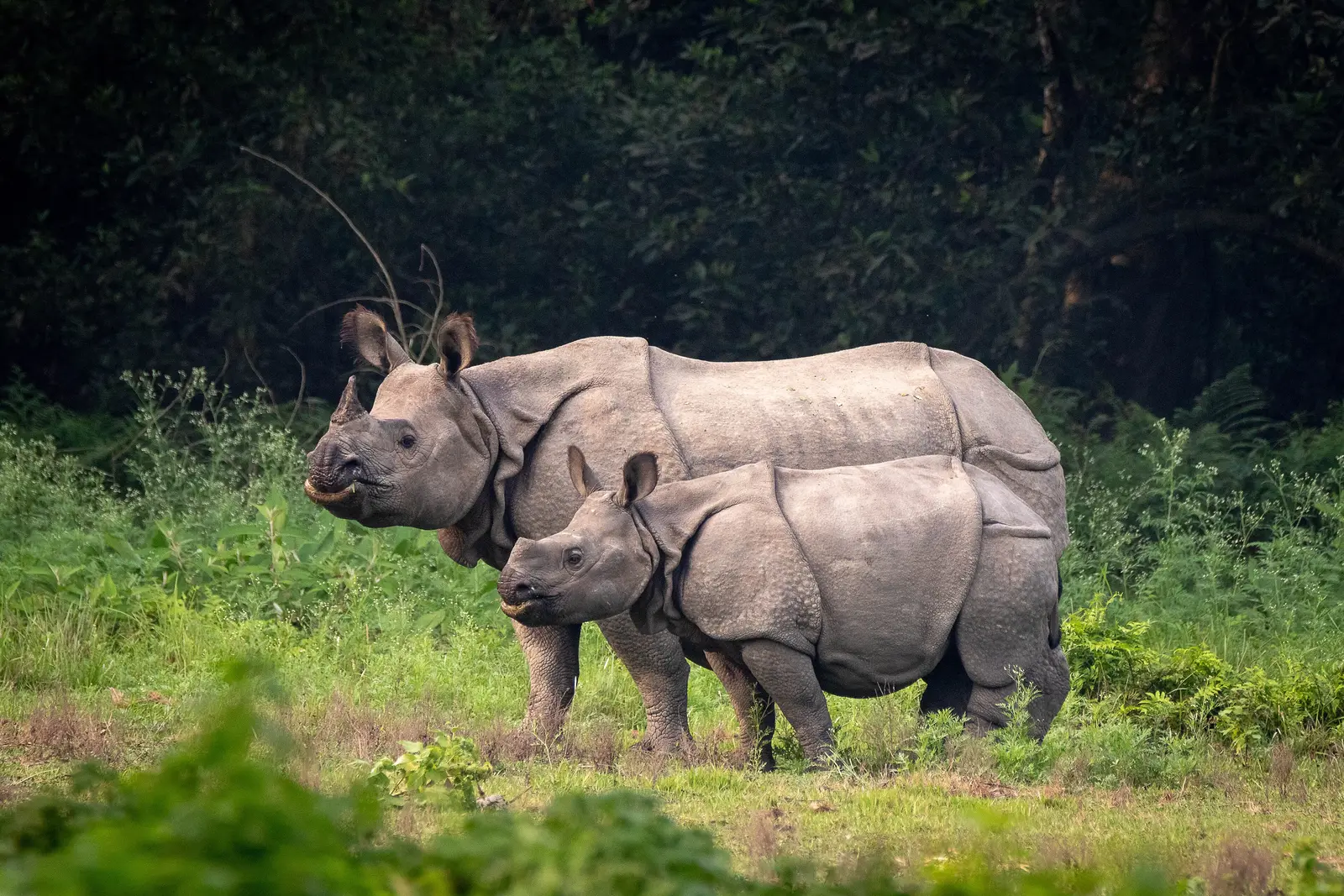
Wildlife · Chitwan
The other Nepal — warm, flat and green, where rhinoceros graze at the edge of tall grass and the forest sounds entirely different.
01 — Overview
Chitwan National Park, established in 1973, was Nepal's first national park and became a UNESCO World Heritage Site in 1984. It protects a mosaic of sal forest, tall elephant grass and riverine floodplain across roughly 950 square kilometres in the Terai lowlands.
The park is best known for greater one-horned rhinoceros and Bengal tiger, but the everyday experience is quieter: kingfishers on the river, deer alarm calls in the grass, a gharial sunning on a sandbank. Sightings are never guaranteed, and a good naturalist will tell you so.
This concept deliberately excludes elephant-back safaris. Walking, canoeing and jeep safaris give better wildlife behaviour to observe and are kinder to the animals. The four-day shape works as an add-on to a trek or as a short family trip from Kathmandu.
4 days · sample itinerary
Descend from the hills into the Terai, transfer to a lodge near Sauraha, and take an evening walk along the Rapti.
Dawn by canoe on the Rapti, a guided walk in the buffer zone with two naturalists, and an evening of Tharu food and music.
Into the park's core for the best chance of rhino, tiger tracks, wild elephant and the grasslands of the Reu and Rapti confluence.
Early birding along the river with a scope, then the drive or flight back to the capital.
Days and stages are indicative. Weather, route conditions, permits and transport can change the plan; a guide may adapt the itinerary for safety or acclimatisation.
Accommodation · transport
A small lodge on the edge of Sauraha with garden rooms, solar hot water and a naturalist on staff. Two or three nights is typical; the itinerary can be shortened to three days.
The lodge is deliberately outside the park boundary, and the design keeps light and noise low so that animals are not disturbed.
Private vehicle from Kathmandu (about five hours) or a short flight to Bharatpur followed by a thirty-minute transfer.
Canoe, jeep and walking inside the park, with a licensed guide required for all activities.
Sample inclusions
Before you go
Neutral colours, long trousers and sleeves for walking, and boots rather than sandals. Leeches are common in the wet season; the dry season is far easier walking.
Never leave the trail or the vehicle without your guide, keep quiet in the grass, and follow instructions immediately if an animal is encountered. Rhino and sloth bear can be dangerous when surprised.
This concept does not include elephant-back riding. If seeing elephants matters to you, ask about the government elephant breeding centre, which is a conservation and education site rather than a ride.
The dry season, roughly October to March, gives the best visibility and the most comfortable walking. The park's grasslands are cut in the dry season, and the monsoon brings heat, humidity and leeches.
Answers, not promises
No, and any operator who promises one is overselling. Chitwan has a healthy tiger population, but the forest is dense and sightings are a matter of luck and patience. Rhino sightings are far more common.
With two licensed naturalists and a small group, walking is a calculated and well-managed risk, not a reckless one. Your guides carry radio contact and know the terrain; their instructions are not optional.
Elephant-back safaris are widely considered to compromise elephant welfare and can cause stress and injury to the animals. Walking and jeep safaris offer better wildlife experiences without that cost.
Yes. Chitwan is easily added after a Pokhara or Annapurna trip, by road or a short flight from Pokhara.
Step one of two
Send a note with your dates and group size. In this demo, the form validates your details and prepares a WhatsApp message rather than contacting a real inbox.
Kaski, Gandaki Province
Five unhurried days on Phewa Lake, with a Himalayan sunrise, hill villages and as much — or as little — activity as you want.
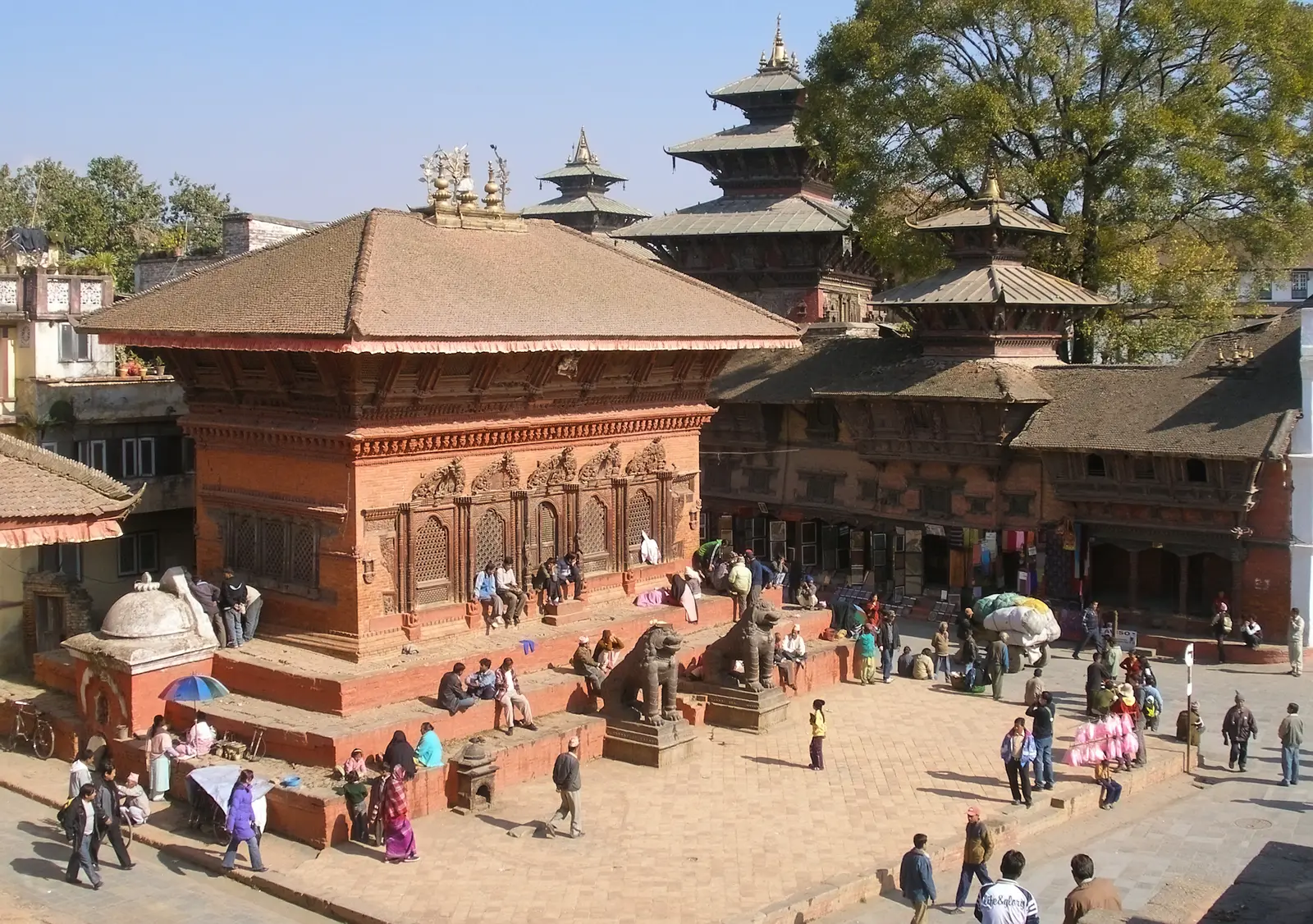
Kathmandu, Lalitpur & Bhaktapur
Seven days inside the living heritage of the Kathmandu Valley: three durbar squares, two great stupas and a sunrise over the Himalaya.