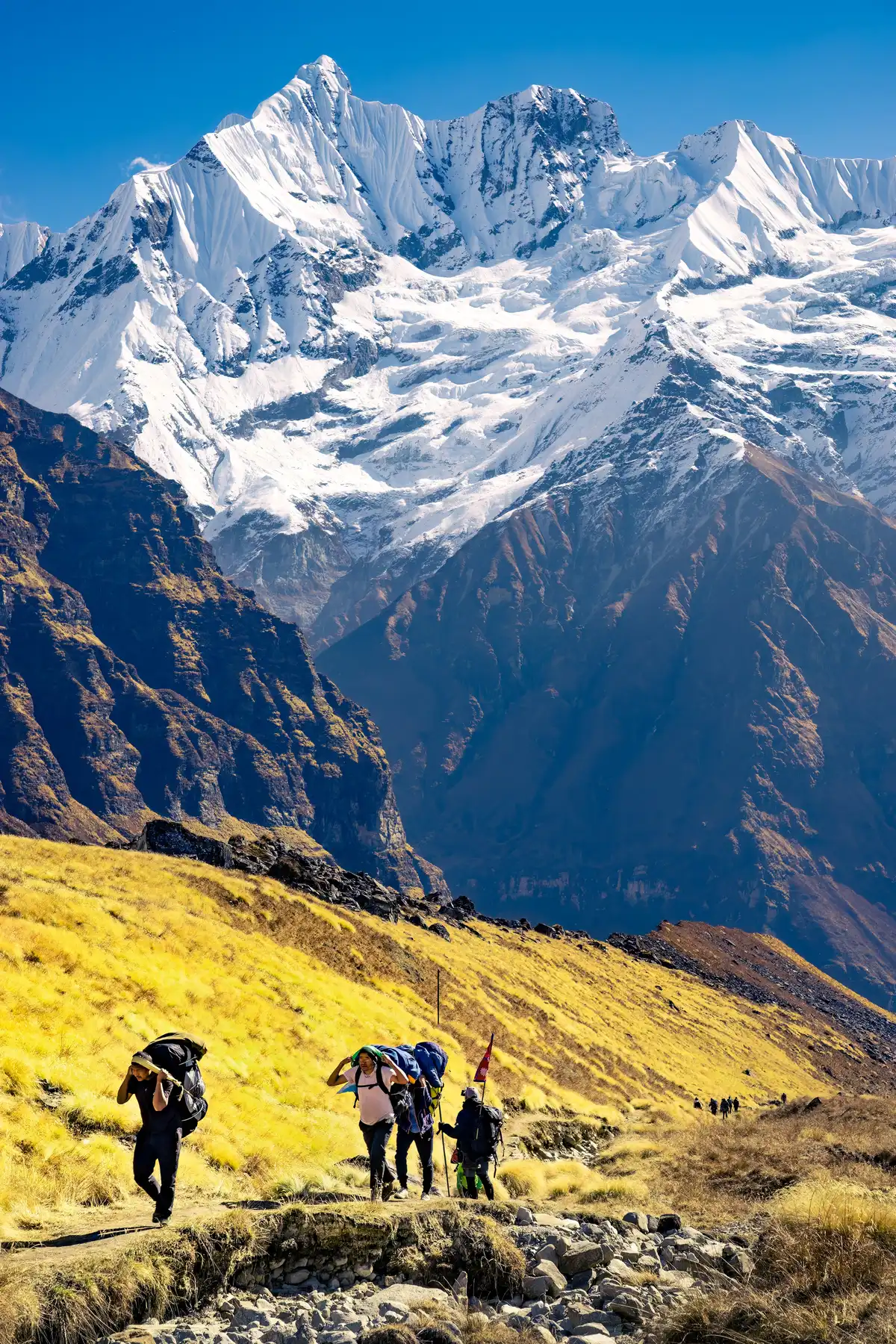
Travel at the speed of the place
Fewer kilometres, more time. A slower itinerary leaves room for weather, for a longer lunch, for the conversation you did not plan. It is also the safer way to gain altitude.
About the concept
Himalayan Wild Trails is a design concept for a Nepal-based adventure travel company: premium in craft, local in knowledge, honest about what travel here involves.
01 — Why this exists
This website was built by TitaniumCode as a portfolio demonstration for Nepal's trekking companies, tour operators and adventure businesses. Himalayan Wild Trails does not exist as an operating company: there are no guides on staff, no registered office, no licences and no bookings.
What is real is the design argument behind it. Nepal's travel websites often look interchangeable — the same stock peaks, the same card grids, the same promises. But Nepal is specific: eight of the world's ten highest mountains, seven UNESCO monument zones in a single valley, a lowland national park with rhinos and a lake city at 742 metres. A website for this country should feel like it could not be about anywhere else.
So the concept is built around place: real geography, real seasonal patterns, photographed Nepal, and copy that respects the intelligence of a traveller who is comparing operators. The gaps are deliberate and disclosed. Where a real company would add its own licences, team, prices and reviews, this site says plainly that they are not here.
02 — The idea
The working tagline is “Find your way into the wild.” It is deliberately not about conquering anything. Nepal's strongest travel experiences tend to be about attention: the hour before sunrise on a ridge, a valley that changes character in a day's walk, a monastery courtyard at dusk.
The site is art-directed to feel like entering a film, then settling into a well-made travel journal: large photographs, quiet editorial pages, and practical trip information that is easy to use without shouting.
See the sample journeys03 — Principles
These are the principles a real operator would need to be able to stand behind. They are written as commitments rather than claims about a company that does not exist.
Fewer kilometres, more time. A slower itinerary leaves room for weather, for a longer lunch, for the conversation you did not plan. It is also the safer way to gain altitude.
Guides, porters, lodge families and drivers are the people who make a journey work. Fair pay, sensible loads, insurance and honest scheduling are part of the design, not an afterthought.
Temples are working places, villages are homes, and festivals are not performances. Ask before photographing, dress for the setting, and let curiosity be polite.
Carry out what you carry in, refill rather than buy bottled water where it is safe, avoid single-use plastic at altitude, and choose wildlife experiences that do not compromise animal welfare.
No guaranteed summits, no invented reviews, no fake scarcity. Route conditions change, flights are delayed, and animals are wild. A good operator says so before you book.
A first trek and a fourth expedition need different trips. So do a family of four and a solo photographer. The itinerary should start from the person, not the template.
04 — How planning would work
In a live version of this site, this is the process an enquiry would set in motion. In this demonstration, the form prepares a message and no one replies.
Dates, appetite for altitude, who is travelling, what you would rather avoid. Nothing is booked at this stage.
Route options with honest trade-offs: length, season, acclimatisation, cost and comfort.
Day-by-day stages, lodges, permits, transport and a clear list of what is and is not included.
Local guides and drivers, daily altitude checks, and the freedom to change the plan when the mountain suggests it.
05 — A note on images
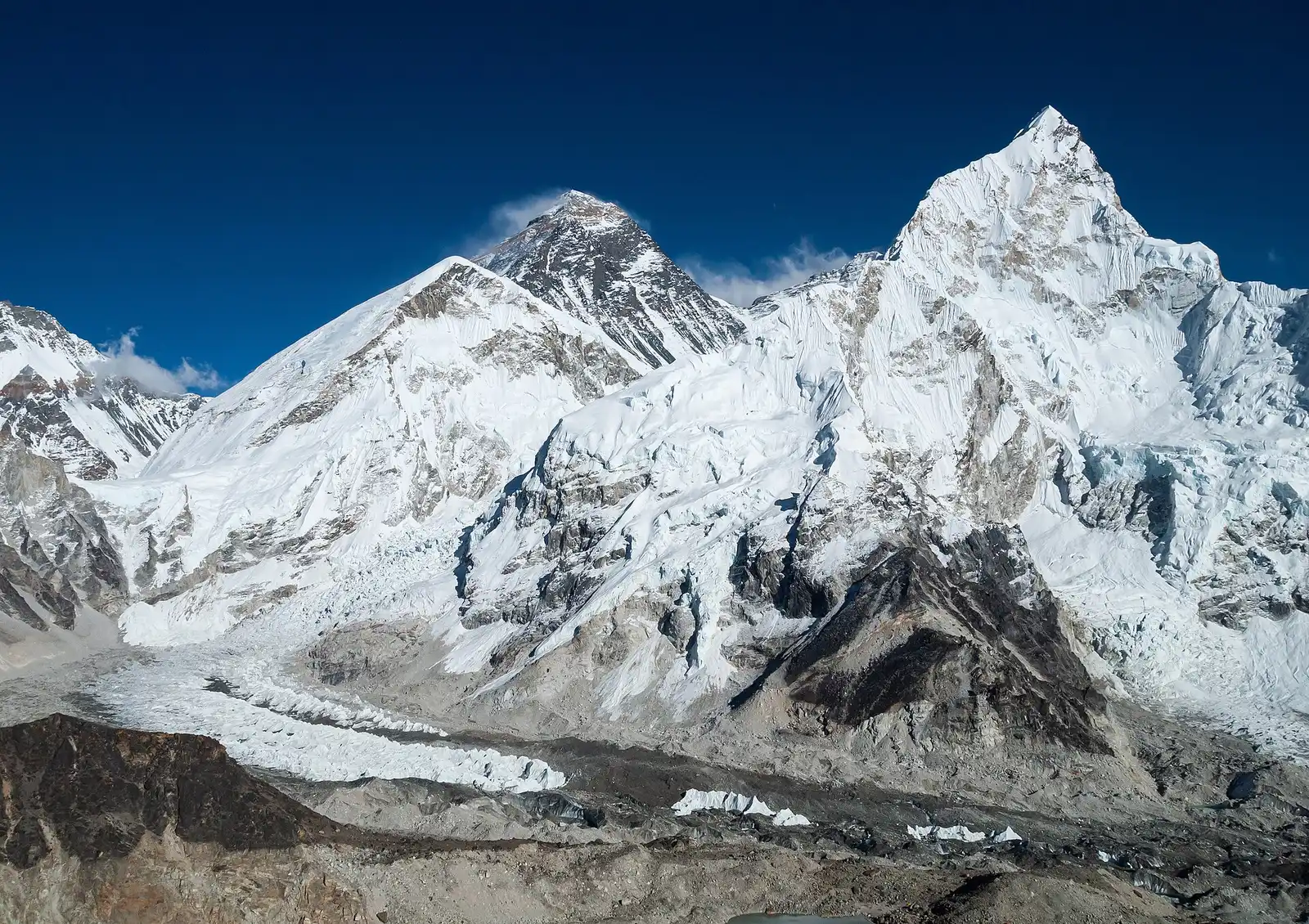
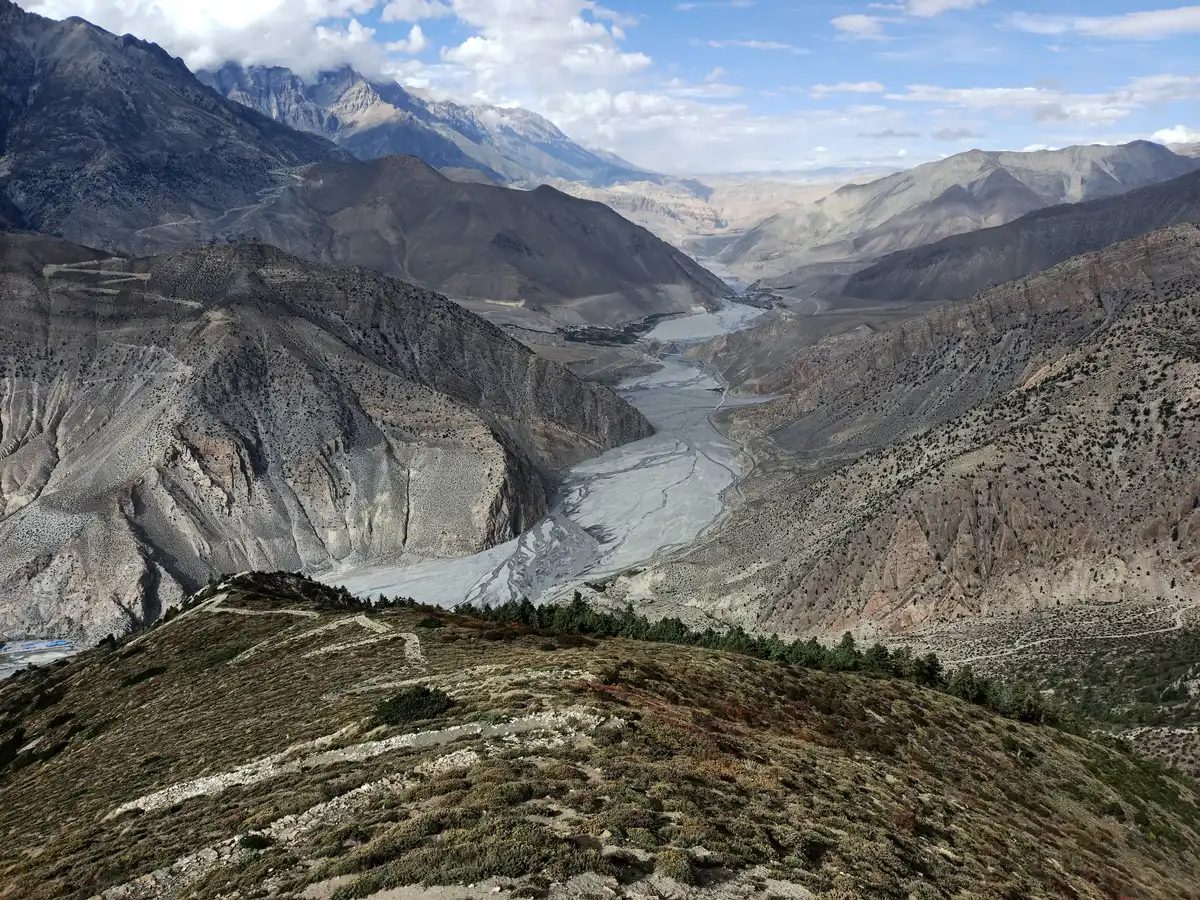
Every photograph on this site is of Nepal, sourced from Wikimedia Commons under the licence recorded in the asset manifest. None are AI-generated landscapes, and attribution and licence notes are kept with the project.
People appear only in public or documentary contexts. A real operator would confirm model releases and replace any image that shows identifiable individuals in a commercial context.